

Pushing boundaries
For 40 years, JLI vision has been solving the computer vision tasks others give up on, challenging both the limits of vision technology and the way business is done.
This is the story of JLI vision a/s.
A story of pioneering spirit, innovative technology, great victories and hard times, and of a "garage business" that grew up to become Europe's largest vision engineering company.
The story of JLI vision is also a story about trust.
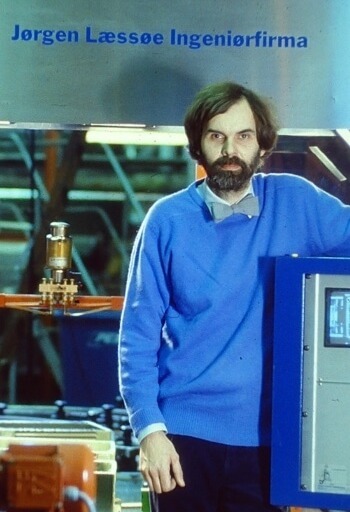
Over the course of 40 years, founder Jørgen Læssøe has woven an almost boundless trust in other people's abilities and judgment into the company, creating a culture that many want to be part of and very few choose to leave.
The challenges that others give up on
June 2025, Herlev.
In the test facilities in the basement beneath JLI vision's offices in Herlev, a large aluminum casting sits on a table. The geometry is complex, with lots of small angles and recesses, and the glossy surface glistens in the light as a robot arm with a camera moves rapidly along one side.
The casting on the table comes from a major company in the automotive industry, and the task is straightforward: automate the quality control of the part so that no critical casting defects slip through production.
The execution is the exact opposite of straightforward. It is one of the most challenging tasks JLI vision has ever undertaken, and the preliminary study alone is priced at over DKK 2 million. The team behind the project is pushing the boundaries of what is possible with AI, 3D vision, and robot technology. All at once.
These are the types of challenges that JLI vision has pursued for 40 years. The challenges that others have to give up on. The ones that either become a "first in the world" solution or very expensive lessons learned.
This approach is a core part of the company's DNA and dates back to the early 1980s, when there wasn't even a term for vision technology.
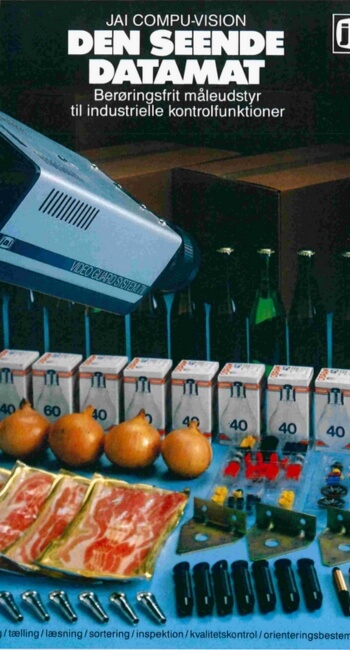
At that time, Jørgen Læssøe pushed the boundaries of what was possible and created Europe's first vision system with a 256x256 pixel image card and a tube camera. And at the same time, he sowed the seeds of what would become JLI vision.
Table of contents
Chapter 1: "Is the image inside the computer?"
How Jørgen Læssøe drew the attention of the crowd at a computer exhibition in 1981, created Europe's first vision system, and sowed the seeds for JLI vision.
Chapter 2: Jørgen Læssøe Ingeniørfirma
With a firm belief in the new technology, Jørgen Læssøe starts his own business and takes on the first challenging projects.
Chapter 3: The pioneers in the ragtag company
In humble, cluttered surroundings, a group of passionate engineers used bits and pieces from the local scrapyard to come up with groundbreaking vision systems for customers around the world.
Chapter 4: Management by doing nothing
The epiphany that led Jørgen Læssøe to coin his own managing principle, and how fundamental trust has shaped the company culture.
Chapter 5: Setbacks and an overdraft running dry
About the bumps in the road along the way and how a Korean adventure took its toll on the overdraft.
Chapter 6: New surroundings and a new self-image
How moving to better, more professional premises with up-to-date test facilities helped change the company's self-image and triple the revenue.
Chapter 7: First in the world
Going after the tasks that others don't dare take on has always been a driving force for JLI vision, even though this comes with a greater risk of failure.
Chapter 8: AI that works in real life
JLI has navigated both gradual technological developments and big leaps forward. The most significant change began when the potential of artificial intelligence for quality control emerged. A change JLI decided to embrace.
Chapter 9: JLI comes into the hands of its employees
In 2023, Jørgen Læssøe decided to sell the majority of his shares to JLI's employees, and to form a foundation that allows him to donate his fortune back to the field he has been passionate about for a lifetime.