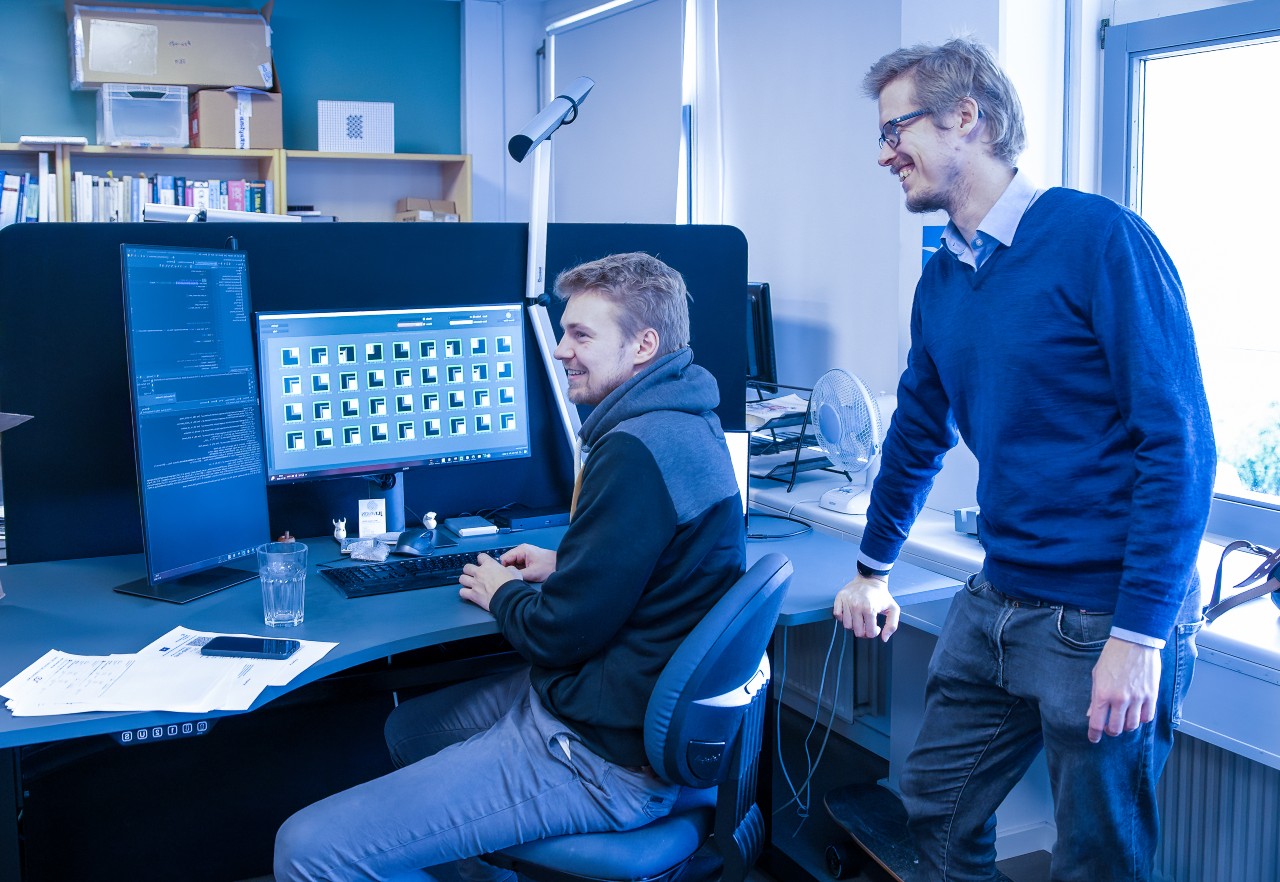
.jpeg)
A vision system rarely fails overnight. Instead, small changes accumulate.
Lighting degrades slightly. Materials vary from one supplier to the next. Mechanical components experience normal wear and tear. Over time, these changes can reduce inspection accuracy, increase false rejects, or allow defects to pass unnoticed.
This is where data trend analysis becomes essential.
Why monitoring matters
A modern vision system generates a large amount of data, but it is often used only for pass/fail decisions.
At JLI, we use data trend analysis to treat it as a continuous feedback mechanism.
Because the reality is simple: production conditions are never static. Without monitoring these gradual changes mentioned above, performance drift can go unnoticed until it becomes a quality issue.
Data trend analysis allows us to detect these subtle shifts early.
Stress testing the system
Before a vision system is deployed, we test its robustness through simulation.
We deliberately introduce challenging conditions into the images:
-
Reduced lighting
-
Added noise
-
Small alignment shifts
-
Other controlled disturbances
This allows us to see exactly how the system behaves under stress and identify where performance begins to degrade.
From these tests, we establish a baseline and define an acceptable operating band around it. In practical terms, this defines what “normal” looks like for that specific vision setup.
.jpg?width=1920&height=1080&name=data%20trend%20analysis%20drift%20threshold%20(1).jpg)
Tracking performance in production
Once the system is installed on the production line, we continuously track key metrics over time.
As long as the measurements remain within the predefined operating band, the system performs as intended.
If a metric begins drifting toward the edge of that band, the system raises an early warning. This gives operators the opportunity to act before defects increase or false rejects escalate.
In many cases, the issue may be minor and can be corrected quickly. Without data trend monitoring, though, such drift might only be discovered after production quality has already suffered.
Turning data into production insight
Data trend analysis does more than protect the vision system itself. It also provides insight into the production process.
When a change is detected, we can often trace it back to a specific material batch, a new supplier, a production adjustment, or wear in a specific piece of equipment.
Instead of simply reacting to quality issues, manufacturers gain visibility into why they occur.
Over time, this insight enables customers to:
-
Compare supplier performance
-
Optimize material selection
-
Adjust process parameters
This way, quality control becomes proactive rather than reactive. By integrating structured data trend analysis into our systems, we ensure that small variations are caught early, performance remains stable, and decisions are based on measurable facts rather than assumptions.
The result is a more robust inspection process and a production line that continuously improves.

.jpeg)